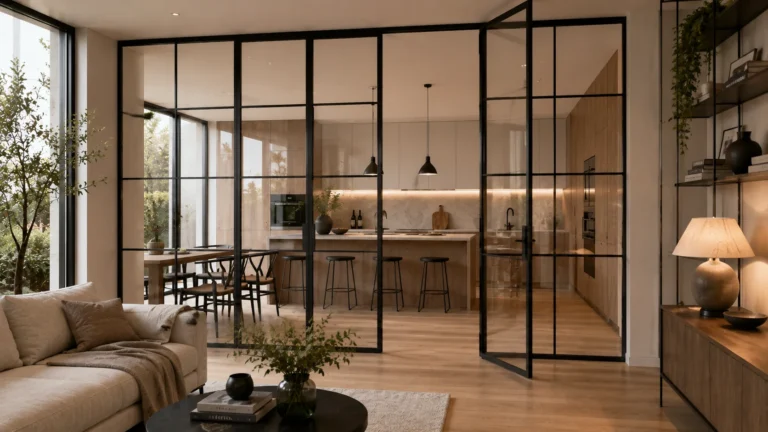
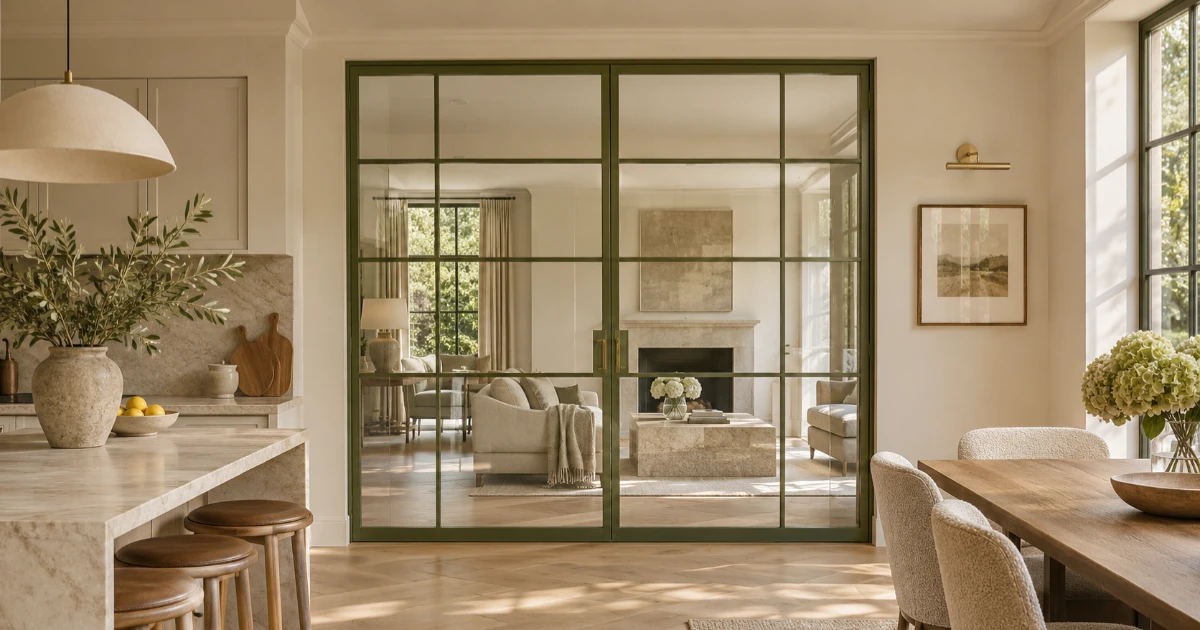
Black steel doors may be a design classic, but they are far from the only option. With powder coated steel doors available in custom RAL colours, you can introduce anything from warm off-white and understated bronze-grey to deep olive green or rich burgundy.
The right finish can transform steel-framed glazing from a striking architectural feature into something that feels entirely at home within your interior.
For homeowners and interior designers, that flexibility opens up some interesting possibilities. Rather than designing an entire room around black frames, you can choose a colour that complements existing materials, reinforces an architectural detail or creates a carefully considered contrast.
Yet colour is only part of the decision. The finish’s sheen, the quality of the powder coating and the relationship between the steel frame, glazing and surrounding materials all influence the finished result.
Here, we explore how powder coating works, which RAL colours suit different interiors, and what to consider when specifying bespoke steel doors that will look as good in years to come as they do on installation day.
What Are Powder-Coated Steel Doors?
Powder-coated steel doors are steel-framed doors finished with a protective, decorative coating applied as a fine powder rather than conventional liquid paint.
The powder is electrostatically applied to a suitably prepared metal surface before being cured under controlled heat. This creates a continuous coating that bonds to the steel and provides a consistent decorative finish.
Unlike a conventional painted finish, which relies on liquid paint drying or chemically curing, powder coating uses a controlled application and heat-curing process. This makes it particularly suitable for factory-finished architectural metalwork, including internal steel doors, glazed partitions and steel window frames.
There are several advantages:
- Design flexibility: Steel frames can be finished in a wide selection of RAL colours to complement your interior.
- Consistent appearance: Controlled application helps achieve a uniform finish across frames and matching components.
- Everyday durability: A correctly specified and applied coating provides resistance to normal handling, wear and surface damage.
- Finish options: Matt, satin and gloss coatings allow the same colour to create noticeably different effects.
- Low-maintenance surfaces: Finished frames can generally be cleaned with a soft cloth and mild cleaning solution.
Powder coating is not indestructible, however. Sharp impacts can still damage the surface, and the quality of preparation beneath the coating matters just as much as the colour itself.
For a bespoke steel door, the aim is to combine a durable finish with the correct frame design, glazing specification and installation details.
Why Choose Custom RAL Colours for Steel Doors?
Steel doors are often associated with the industrial aesthetic: slim black frames, large glazed panels and geometric glazing bars. It’s a compelling look, but it can feel too strong in interiors built around softer colours and natural materials.
Custom RAL colours provide an alternative without sacrificing the distinctive proportions and strength of steel.
Create a More Cohesive Interior
Consider a kitchen with oak cabinetry, natural stone worktops and warm white walls. Black steel doors would introduce a deliberate contrast, whereas an earthy grey or muted green could connect more naturally with the surrounding palette.
The difference is subtle but important. Instead of standing apart from the room, the steel frames become part of its overall material composition.
This approach is particularly effective when coordinating doors with painted joinery, fitted furniture, architectural metalwork or window frames.
Highlight Architectural Features
Not every door needs to disappear into its surroundings.
A deep burgundy steel door within a pale hallway can create a distinctive focal point. Dark bronze-grey frames can complement exposed brickwork, while muted blues can introduce colour into otherwise neutral living spaces.
Because steel frames have relatively slim sightlines, even stronger colours can feel refined when the glazing proportions are carefully considered.
Move Beyond the Standard Industrial Look
Colour also allows steel doors to work across a wider range of architectural styles.
In a period property, warm neutrals and heritage-inspired greens can sit comfortably alongside traditional cornices, timber flooring and decorative mouldings. In a contemporary home, soft greys or off-white frames can help maintain a minimalist appearance.
For a deeper comparison of steel-frame designs and materials, see our guide to affordable alternatives to Crittall-style doors.
Understanding RAL Colours and Steel Door Finishes
RAL is an internationally recognised colour system used throughout architecture, manufacturing and interior design. Instead of relying on subjective descriptions such as ‘warm grey’ or ‘dark green’, designers and manufacturers can specify an identifiable colour reference.
For example, RAL 7016 refers to Anthracite Grey, while RAL 9005 identifies Jet Black.
The official RAL CLASSIC collection contains 216 colours, including many widely used architectural shades.
This system makes it considerably easier to communicate a colour preference when commissioning bespoke steel doors, windows or partitions.
Does Every RAL Colour Look the Same?
A RAL code establishes a colour reference, but it doesn’t guarantee that every finished surface will appear identical under all conditions.
The perceived colour can change depending on the coating’s gloss level, surface texture, lighting conditions and the materials placed beside it.
A satin-coated grey frame may appear noticeably richer than the same nominal colour in a very matt finish. Similarly, a green that looks understated under warm artificial lighting can appear cooler beside a north-facing window.
Colour consistency also depends on the coating formulation and manufacturing process. When specifying adjoining components, it is sensible to agree the finish and coating system rather than relying on the colour code alone.
Our advice: Use online RAL charts for initial inspiration, but make your final decision using an appropriate physical colour reference or an approved coated sample wherever possible.
The Best RAL Colours for Powder-Coated Steel Doors
The most successful colour isn’t necessarily the most fashionable one. It is the shade that works with your architecture, natural light and existing materials.
These RAL colours offer useful starting points for different interior schemes.
RAL 9005 Jet Black: A Timeless Architectural Finish
Black remains a strong choice for steel-framed glazing, particularly in interiors where graphic lines and architectural contrast are intentional.
RAL 9005 works especially well alongside pale walls, natural timber, concrete and stone. It emphasises the geometry of the door and creates definition between adjoining spaces.
For a softer result, consider how the sheen level affects the appearance. A matt or satin black finish generally feels more understated than a high-gloss alternative.
RAL 7016 Anthracite Grey: Softer Than Black
Anthracite Grey provides much of the definition associated with black steel doors, but with a slightly softer appearance.
It is particularly effective in contemporary homes with grey window frames, dark kitchen cabinetry or polished concrete flooring.
However, anthracite can look cooler in rooms with limited natural light. If your interior contains warm oak, cream upholstery and beige stone, compare it with warmer grey alternatives before deciding.
RAL 9010 Pure White: Understated and Architectural
White steel doors can be surprisingly effective, particularly where the aim is to divide rooms without introducing a dominant dark frame.
RAL 9010 has a softer quality than some brighter whites, making it suitable for interiors with warm neutrals, pale timber and traditional plasterwork.
In contemporary homes, white frames can also help glazed partitions feel more integrated with the surrounding walls.
Be aware that matching white powder coating to painted walls requires care. Two products described as ‘white’ can have different undertones and reflect light differently.
RAL 7039 Quartz Grey: A Refined Neutral
Quartz Grey offers a more nuanced alternative to conventional charcoal or anthracite finishes.
Its muted, earthy character works well with limestone, oak, textured plaster and other natural materials. This makes it particularly appealing for interiors where steel doors should complement rather than dominate the scheme.
In rooms with layered neutral palettes, the right grey can provide definition without the visual weight of black.
RAL 6003 Olive Green: Colour With Character
Muted greens can be particularly effective on steel-framed doors, creating a connection with timber, natural stone and garden views.
RAL 6003 Olive Green is worth exploring for country homes, contemporary extensions and interiors with earthy colour palettes.
It can also work beautifully between a kitchen and dining room, particularly when paired with warm wood flooring or neutral cabinetry.
Rather than matching every green element exactly, consider using complementary tones. A darker green frame against softer sage cabinetry can create depth without making the design feel overly coordinated.
RAL 3005 Wine Red: A Confident Design Statement
For homeowners who want something more distinctive, RAL 3005 Wine Red offers a rich, understated alternative to black or grey.
This deeper red can work particularly well alongside walnut, warm metals, cream walls and darker timber finishes.
Used on a single feature door or glazed screen, it can give a space a tailored, design-led quality without relying on bright or saturated colours.
Quick RAL Colour Comparison
| RAL Colour | Design Character | Pairs Well With |
|---|---|---|
| RAL 9005 Jet Black | Bold, graphic and architectural | Light walls, oak, concrete and stone |
| RAL 7016 Anthracite Grey | Contemporary and understated | Dark joinery, grey glazing and modern kitchens |
| RAL 9010 Pure White | Soft, minimal and unobtrusive | Warm neutrals, pale timber and plasterwork |
| RAL 7039 Quartz Grey | Warm, earthy and sophisticated | Limestone, oak and textured finishes |
| RAL 6003 Olive Green | Natural, distinctive and grounded | Timber, stone and earthy colour schemes |
| RAL 3005 Wine Red | Rich, expressive and characterful | Walnut, warm metals and cream interiors |
These are design suggestions rather than strict rules. Colour perception is influenced by the wider room, so samples should always be considered in context.
If you have a particular shade in mind, contact our team to discuss your preferred RAL colour and the finish options available for your project.
Matt, Satin or Gloss: Which Finish Works Best?
Choosing a RAL colour is only half the specification. The surface sheen has a substantial influence on how the finished steel doors look and feel.
Two doors manufactured in the same RAL colour can create quite different impressions depending on whether they have a matt, satin or gloss finish.
Matt Powder-Coated Steel Doors
Matt finishes absorb and diffuse more light, creating a softer, more understated appearance.
They are especially effective in minimalist interiors, where the objective is to emphasise the proportions of the glazing rather than the reflectivity of the frame.
Matt finishes can also work well with natural materials such as oak, limestone, clay plaster and textured fabrics.
One consideration is maintenance. Some very low-sheen or textured coatings can show finger oils or changes in appearance after repeated rubbing, depending on their formulation.
Satin Powder-Coated Steel Doors
Satin finishes provide a useful balance between visual softness and a subtle reflective quality.
For many residential projects, satin is an excellent starting point because it works across contemporary, transitional and traditional interiors.
It can provide a refined appearance without creating pronounced reflections around the glazed panels.
Gloss Powder-Coated Steel Doors
Gloss finishes reflect more light and can make colours appear particularly rich and saturated.
They can be effective in interiors with polished surfaces, decorative detailing or a more expressive design direction.
However, strong reflections can also make minor surface imperfections more noticeable. Gloss is therefore worth considering carefully on extensive glazed screens or highly visible door frames.
Important: Matt, satin and gloss are broad descriptions. Actual gloss levels vary between powder-coating systems, so an agreed sample and finish specification are more reliable than the description alone.
How Durable Are Powder-Coated Steel Doors?
One of the main reasons powder coating is used on architectural steelwork is its ability to produce a durable, factory-applied finish.
When the metal is correctly prepared and the coating is properly applied and cured, the result can withstand the handling and everyday use associated with internal doors.
However, durability depends on more than the coating process itself.
Surface Preparation Makes a Difference
Steel needs appropriate preparation before coating. Depending on the application, this may involve cleaning, mechanical preparation and a suitable pretreatment or protective system.
Contamination, inadequate preparation or poor coating adhesion can affect the long-term performance of the finish.
The Powder Coating Institute’s technical guidance explains why cleaning and surface pretreatment are fundamental to coating performance.
This is an important distinction when comparing quotations. Two products can be described as powder-coated steel doors while using different preparation methods and coating specifications.
Are Powder-Coated Steel Doors Scratch-Resistant?
Powder coating can provide good resistance to normal everyday wear, but it is not completely scratch-proof.
Sharp objects, hard impacts and abrasive cleaning products can still damage the finish. Areas around handles and frequently used door edges may experience more contact than other parts of the frame.
Good hardware selection, correct installation and sensible maintenance all help reduce unnecessary wear.
What About External Steel Doors?
External steel doors require additional consideration because their coatings must contend with moisture, temperature changes, sunlight and environmental exposure.
A finish suitable for a dry internal living space should not automatically be assumed suitable for an exposed exterior.
For external applications, the coating system, corrosion protection, steel preparation and environmental conditions need to be considered together. Coastal locations and exposed elevations may require more demanding specifications.
It’s worth confirming the intended exposure conditions at the outset, rather than making the coating decision purely on appearance.
Matching Steel Doors With Walls, Windows and Joinery
A successful colour scheme isn’t necessarily one where every surface matches. Often, the most refined interiors use a small number of complementary tones and materials.
Should Steel Doors Match Your Window Frames?
Matching internal steel doors to external window frames can create continuity, particularly when both are visible from the same room.
However, exact matching isn’t always necessary. A darker internal frame can provide definition against lighter exterior glazing, while similar warm undertones can make two different colours feel related.
When a close match is important, check both the RAL reference and the coating sheen. Frames in nominally identical colours may still look different if one is gloss and the other is matt.
Coordinating Doors With Kitchen Cabinetry
Steel doors are frequently used between kitchens, dining rooms and living spaces, making cabinetry colour an important consideration.
For dark kitchens, slightly lighter steel frames can prevent the room from feeling visually heavy. In pale kitchens, a deeper frame colour can provide contrast and structure.
For timber kitchens, look at the undertones of the wood. Oak, walnut and ash each interact differently with green, grey and neutral finishes.
Using Steel Doors in Open-Plan Living Spaces
Colour is particularly important when steel-framed glazing forms a substantial part of an interior.
A full-height glazed partition can occupy a significant area of the room, even when the steel profiles themselves are slim. Dark frames emphasise the glazing grid, whereas lighter finishes can make the partition feel less prominent.
In a smaller space, that distinction can noticeably change how open the room feels.
Our article on internal steel doors for open-plan living explores how glazed doors and partitions can separate functional areas while retaining natural light and visual connection.
Five Details to Check Before Choosing a RAL Colour
When specifying bespoke powder-coated steel doors, it’s worth looking beyond the initial colour sample.
1. Check the Colour in Natural and Artificial Light
View colour samples in the room where the doors will be installed, ideally at different times of day.
North-facing spaces can make some colours appear cooler, while warm artificial lighting may alter the appearance of whites, greys and greens.
2. Consider the Colour of the Glazing
Clear, reeded, frosted and tinted glazing can each affect the overall appearance of a steel-framed door.
For example, a soft grey frame around reeded glass creates a different impression from the same frame surrounding clear glass.
The door should be considered as a complete composition, not simply as a coloured frame.
3. Confirm the Finish Across All Components
Ask which components will receive the selected coating.
The door frame, glazing bars, hinges, handles and associated ironmongery may have different material and finish requirements.
Some hardware can be colour-matched, while other elements may be better specified in black, stainless steel, brass or another complementary finish.
Confirming these details before manufacture prevents surprises during installation.
4. Understand the Difference Between a RAL Match and an Exact Match
A RAL code does not guarantee an exact visual match with every painted or coated product carrying the same reference.
Different substrates, gloss levels, surface textures and coating manufacturers can influence the result.
If you are coordinating steel frames with spray-finished cabinetry or existing windows, compare physical samples under consistent lighting and agree an acceptable match before ordering.
5. Check Availability and Lead Times
Not every powder-coating system is available in every colour, sheen or texture.
Standard shades may be easier to source, while less common colours or specialist finishes can involve additional costs or longer production times.
For time-sensitive renovations, confirm the available specification and programme before finalising the wider design.
How Much Do Custom RAL Powder-Coated Steel Doors Cost?
The cost of bespoke powder-coated steel doors depends on several factors, and the colour itself is only one part of the quotation.
Door size, the number of glazed panels, opening configuration, steel profile design, glazing specification and hardware selection can all affect the final price.
A standard finish may already be included in a supplier’s base specification, while a non-standard RAL colour, specialist sheen or textured coating may involve a supplementary charge.
There can also be minimum processing charges for small or unusual coating batches. This is particularly relevant when ordering a single feature door in a less commonly specified colour.
For homeowners, it is worth deciding whether the colour is central to the overall interior scheme before comparing quotations purely on price.
For interior designers, agreeing the colour and sheen early can help avoid specification changes after technical drawings have been approved.
At The Frameless Door Company, we offer bespoke steel doors, windows and partitions with a wide choice of RAL finishes. Our coordinated service covers design consultation, survey, CAD drawings, finish specification and installation.
Request a quotation for bespoke powder-coated steel doors and tell us about your project, preferred colour and glazing requirements.
How to Care for Powder-Coated Steel Doors
Powder-coated steel doors are generally straightforward to maintain, particularly in residential interiors.
For routine cleaning, use a soft microfibre cloth with a mild, suitably diluted cleaning solution. Remove residue using a clean, damp cloth and dry the surface gently.
Avoid abrasive pads, aggressive solvents and harsh cleaning chemicals unless their suitability has been confirmed by the coating manufacturer.
It’s also sensible to check the edges of doors, hinges and hardware periodically, particularly in high-traffic areas.
If a coating is chipped or scratched through to the steel, seek advice on a compatible repair method. A simple cosmetic touch-up may not recreate the same protective properties as the original factory-applied coating.
With suitable care and a properly specified finish, powder-coated steel doors can retain their appearance over many years of ordinary use.
Bespoke Powder-Coated Steel Doors From The Frameless Door Company
Choosing the right RAL colour is an important design decision, but it should form part of a wider consideration of the door’s proportions, glazing, hardware and surrounding architecture.
At The Frameless Door Company, we bring more than 25 years of design and door manufacturing experience to bespoke architectural projects.
Our steel door, window and partition range offers the flexibility to create individual designs with carefully selected finishes, whether you’re planning a single feature door, a glazed room divider or a coordinated scheme across several spaces.
We work with homeowners, interior designers, architects and contractors, providing a coordinated approach from initial design through to specification and installation.
If you’re considering powder coated steel doors in a custom RAL colour, we’d be pleased to discuss your ideas, explain the available finishes and help you make an informed decision.
Contact The Frameless Door Company to discuss your bespoke steel door project.
Frequently Asked Questions About Powder-Coated Steel Doors
Can steel doors be powder-coated in any RAL colour?
Steel doors can be powder-coated in a very wide range of RAL colours, including classic neutrals, dark architectural shades and more distinctive colours. However, availability depends on the coating system, selected sheen and manufacturing requirements. Confirm your preferred RAL reference with the supplier before ordering.
Are powder-coated steel doors better than painted steel doors?
Powder coating offers a durable, consistent factory-applied finish and is often well suited to architectural steelwork. High-quality liquid paint systems can also perform well, so neither is universally superior. Surface preparation, coating specification, application quality and intended use are more important than the coating label alone.
What is the most popular RAL colour for steel doors?
Black and anthracite grey are established choices for steel-framed doors because they create clean architectural lines and suit many contemporary interiors. RAL 9005 Jet Black and RAL 7016 Anthracite Grey are useful starting points. For softer schemes, warm greys, off-whites and muted greens are worth considering.
Can powder-coated steel doors be used in bathrooms?
Powder-coated steel doors may be suitable for bathrooms when the coating system, steel protection and hardware are specified for the environment. Moisture, condensation and ventilation need to be considered, particularly in regularly humid spaces. A standard internal finish should not automatically be assumed suitable for every bathroom.
Do powder-coated steel doors rust?
Powder coating helps protect steel from its environment, but it does not make steel inherently rust-proof. Corrosion can occur if moisture reaches inadequately protected metal through damaged coatings, unprotected edges or poor surface preparation. The level of corrosion protection required depends on whether the doors are used internally or externally.
Can I match powder-coated steel doors to my kitchen cabinets?
Yes, steel doors can often be specified in a RAL colour that closely complements painted kitchen cabinetry. However, cabinetry paint and powder coating may have different surface textures and gloss levels, so an exact visual match is not guaranteed. Comparing physical samples is the most reliable approach.
Is a matt or satin finish better for internal steel doors?
Both are suitable design choices. Matt finishes create a softer, less reflective appearance, while satin finishes offer a subtle sheen and often work well across different interior styles. The best option depends on the room, colour, lighting and maintenance preferences. Ask to compare finished samples if possible.
Can you change the colour of powder-coated steel doors later?
It is possible to refinish powder-coated steel doors, but the process is more involved than simply repainting a wall. Existing coatings may need specialist preparation or removal, and glazing, seals and hardware may need to be removed or protected. Choosing the right colour before manufacture is usually the simpler approach.
Do custom RAL colours cost more than black steel doors?
They can, depending on the supplier and coating specification. Standard black finishes may be included in the base price, while less common colours or specialist finishes may carry additional processing costs. Door dimensions, glazing, hardware and installation requirements will also influence the overall quotation.
How do I order bespoke powder-coated steel doors?
Start by establishing your opening dimensions, preferred door configuration, glazing requirements and RAL colour. You can then discuss technical details, finish availability and installation requirements with a specialist supplier. To begin your project, contact The Frameless Door Company for advice and a tailored quotation.