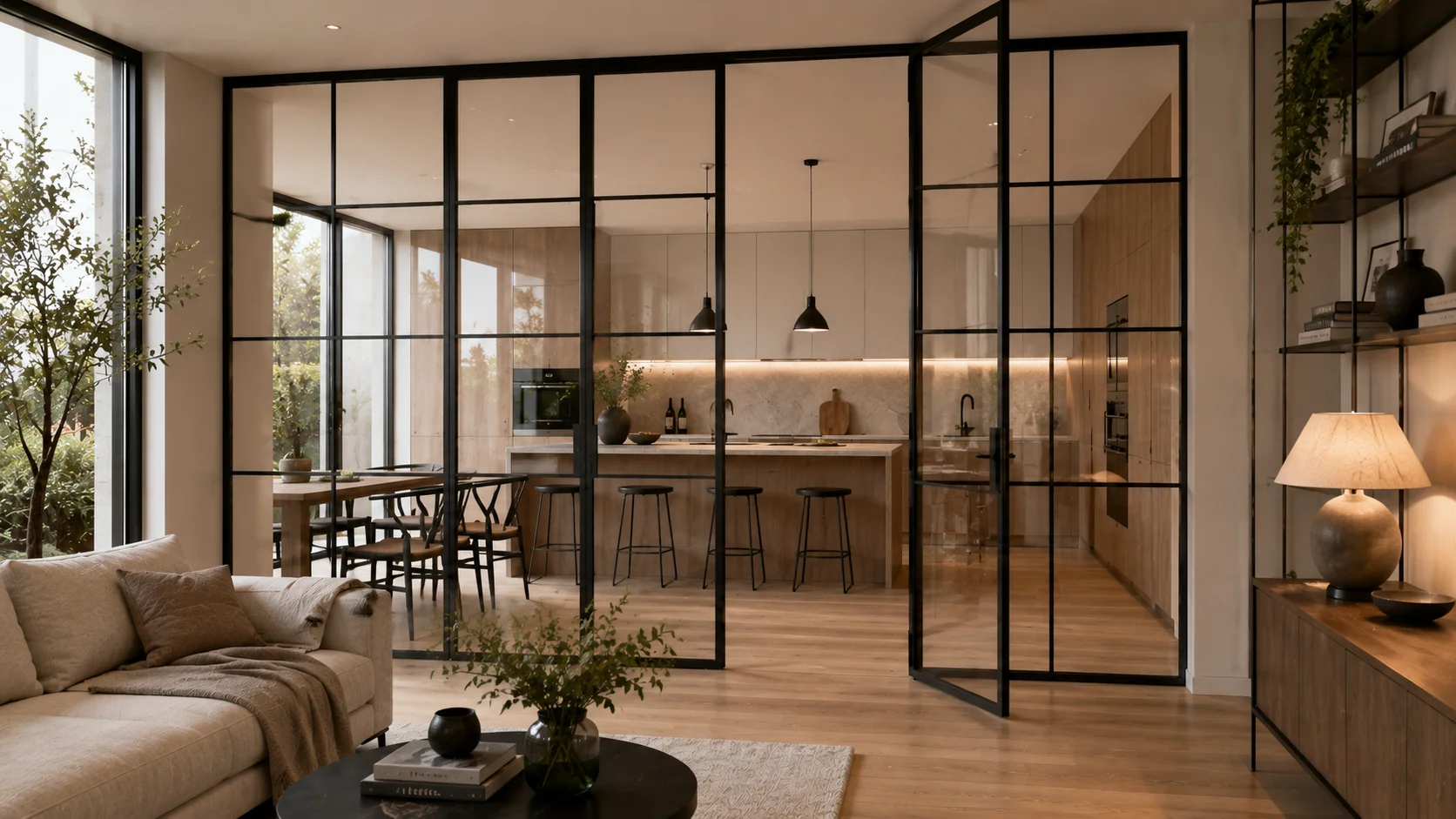
Internal steel doors have become one of the defining features of modern open-plan living. They offer a way to divide spaces without sacrificing natural light, helping homes feel connected, architectural and carefully considered at the same time.
Once associated mainly with industrial buildings and commercial spaces, steel-framed internal glazing is now appearing in some of the UK’s most design-led homes. Homeowners and interior designers are increasingly using steel doors and partitions to create quieter zones within open-plan layouts while maintaining openness and visual flow.
The appeal is not simply aesthetic. Internal steel doors solve a real design challenge. They help define how a space functions without reverting to heavy walls or disconnected rooms.
In this guide, we’ll explore why steel doors work so well in open-plan interiors, what to consider before specifying them, and how bespoke steel systems differ from lower-cost alternatives.
Why Internal Steel Doors Work So Well in Open-Plan Spaces
Open-plan living remains hugely popular, but many homeowners eventually realise that completely open spaces can create practical compromises. Noise travels more easily, heating becomes less efficient, and it can be difficult to create separation between different functions within the home.
This is where internal steel doors and glazed partitions become so effective.
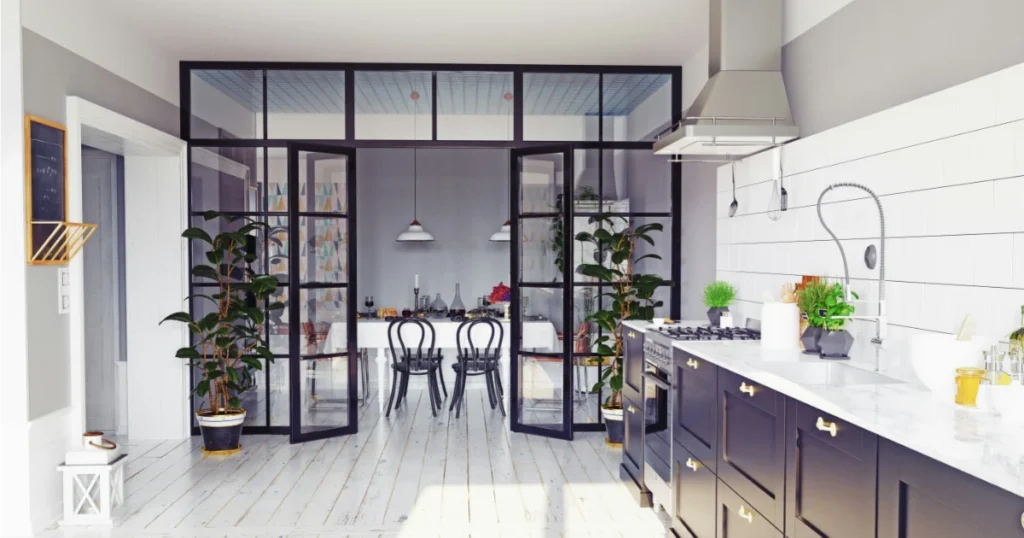
Instead of closing rooms off entirely, they create visual boundaries while still allowing light and sightlines to pass through the space. The result is a home that feels connected but more structured.
Steel-framed glazing is particularly effective between:
- Kitchens and living spaces
- Dining rooms and hallways
- Home offices and family rooms
- Extensions and original parts of a property
- Snugs, libraries and quieter retreat spaces
This flexibility is one reason steel doors have become closely associated with contemporary architectural interiors.
Internal Steel Doors Create Separation Without Losing Light
One of the biggest advantages of steel-framed glazing is the ability to retain natural light throughout the home.
Traditional partition walls often create darker interiors, especially in open-plan layouts where daylight may only enter from one or two sides of the building. Internal steel doors allow light to travel much further into the property while still creating distinct zones.
This becomes especially important in:
- Rear extensions
- Victorian terrace renovations
- Deep-plan layouts
- Homes with limited side windows
The slim sightlines of steel are a major part of the appeal. Because steel is structurally strong, the framing can remain visually lightweight while supporting large glazed areas.
This is one reason many homeowners are drawn to Crittall-style doors and other industrial-style glazing systems. The balance of strength, transparency and architectural definition is difficult to achieve with bulkier alternatives.
For a broader comparison of different systems and finishes, you can also explore our guide to Crittall-style door alternatives.
Why Steel Feels More Architectural Than Aluminium
This is an area many competing articles fail to explain properly.
At first glance, aluminium and steel systems can appear visually similar. However, they create a noticeably different feel within a space.
| Steel Doors | Aluminium Systems |
|---|---|
| Slimmer sightlines | Typically thicker profiles |
| More refined architectural feel | Often more systemised appearance |
| Excellent rigidity and strength | Lighter material overall |
| Ideal for heritage and contemporary settings | Typically more contemporary focused |
| Highly bespoke manufacturing possibilities | Often more modular |
Steel tends to feel more integrated and architectural because the profiles can remain extremely fine while still maintaining structural performance.
This subtlety is a major part of why bespoke steel doors are increasingly specified in premium residential projects.
The Best Applications for Internal Steel Doors
One of the strengths of steel-framed glazing is versatility. The same design language can work across minimalist interiors, period renovations and more layered contemporary schemes.
Some of the most effective applications include:
Kitchen Partitions
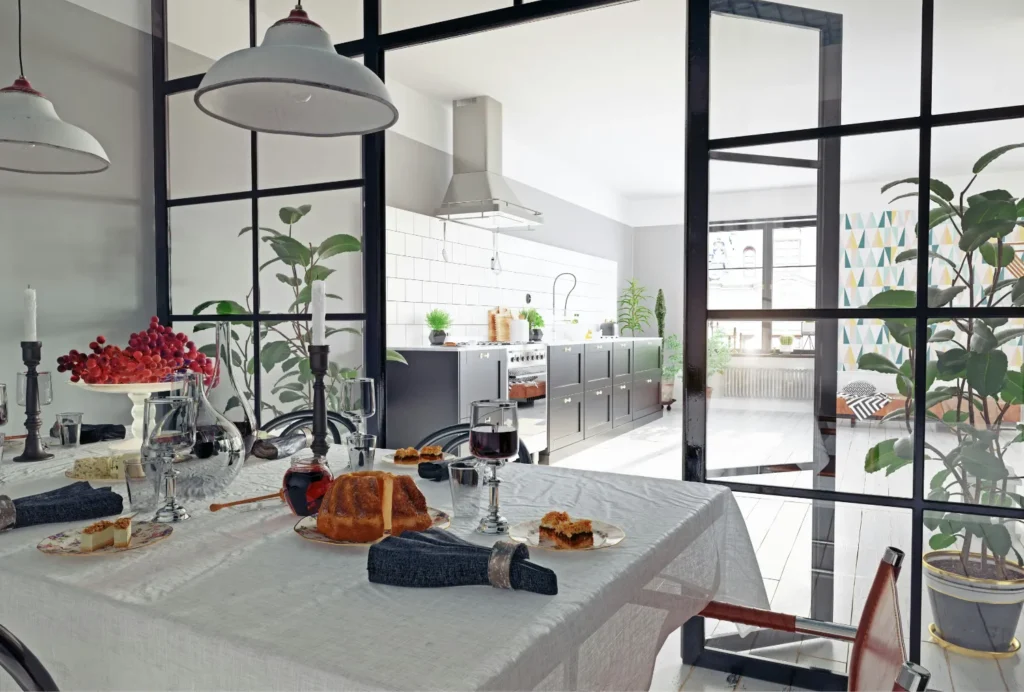
Steel doors allow kitchens to be partially separated without feeling disconnected from the rest of the home. This helps contain cooking noise and activity while maintaining openness.
Home Office Spaces
As more people work from home, steel partitions have become a popular way to create dedicated workspaces without fully enclosing rooms.
Extension Transitions
In larger renovations, internal steel glazing is often used between the original house and the extension, helping create distinction between old and new spaces.
Living Room Divisions
Steel-framed screens can subtly divide living areas while preserving natural light and long sightlines.
What Most Homeowners Get Wrong About Steel Doors
One of the most common misconceptions is that steel doors are purely decorative.
In reality, they significantly affect how a space functions. The best projects are carefully planned around circulation, acoustics, lighting and proportion rather than simply choosing a door style.
Another mistake is assuming all steel-look systems deliver the same result.
Many lower-cost products imitate the appearance of steel using thicker aluminium or simplified glazing systems. While these can work in some situations, they often lack the refinement and proportions associated with genuine bespoke steel doors.
This becomes especially noticeable in larger openings or more minimal interiors where proportion and detailing are critical.
Powder Coating, Finishes and Bespoke Options
Modern steel doors are no longer limited to black frames alone.
One of the biggest shifts in recent years is the move towards softer and more bespoke finishes. Powder-coated steel systems are now available in a wide range of RAL colours, allowing the glazing to feel more integrated into the overall interior palette.
Popular choices include:
- Warm bronze tones
- Soft off-black finishes
- Brushed metallic finishes
- Muted architectural greys
- Traditional heritage-inspired colours
Hardware finishes also play an important role. Handles, hinges and locking systems should feel coordinated with the wider interior rather than treated as secondary details.
At The Frameless Door Company, steel systems are specified as part of a complete design approach, including survey, CAD drawings, finishes and installation.
Do Internal Steel Doors Work in Traditional Homes?
Absolutely. In fact, some of the most successful projects involve combining steel-framed glazing with older properties.
Steel doors create an interesting contrast against traditional architecture because they introduce clean geometry without competing with the character of the building.
This works particularly well in:
- Victorian homes
- Edwardian renovations
- Converted barns
- Period townhouses
- Contemporary rear extensions
The key is proportion and restraint. The best installations feel integrated into the architecture rather than inserted as a trend-driven feature.
Planning and Technical Considerations
One thing rarely discussed properly online is how important early coordination is when specifying steel systems.
Large glazed partitions often affect flooring transitions, ceiling details, lighting layouts and structural openings. The earlier these elements are considered, the cleaner the final result tends to be.
It is also worth understanding that glazing specification matters. Depending on the project, considerations may include:
- Acoustic performance
- Privacy levels
- Safety glazing requirements
- Thermal performance for external systems
For homeowners undertaking structural changes or renovations, the Planning Portal can provide useful guidance on building regulations and approvals.
Why Internal Steel Doors Continue to Grow in Popularity
Steel-framed glazing sits at an interesting point between architecture and interior design. It solves practical problems while also improving how a home feels visually.
That combination is why internal steel doors continue to appear across both luxury renovations and contemporary new-build homes.
They allow open-plan spaces to feel calmer, more organised and more intentional without losing the openness that makes modern layouts appealing in the first place.
Final Thoughts
Internal steel doors offer far more than a visual trend. When properly designed and integrated, they help shape how open-plan homes function, feel and connect together.
The best results come from treating steel glazing as part of the architecture of the space rather than simply selecting a door style. Proportion, detailing, finishes and layout all play a major role in creating a refined and lasting result.
If you are exploring steel glazing for your own project, take a look at our steel doors, windows and partitions or explore our guide to Crittall-style door alternatives for further inspiration and specification insight.
Internal Steel Doors FAQs
Are internal steel doors suitable for small spaces?
Yes. Because steel frames can remain visually slim, they often help smaller spaces feel more open and connected while still creating separation.
What is the difference between steel doors and Crittall-style doors?
Crittall-style doors refer to the industrial-inspired appearance associated with slim steel glazing systems. Many bespoke steel doors achieve a similar look without being official Crittall products.
Can internal steel doors reduce noise?
Yes. While they do not isolate sound in the same way as solid walls, glazed partitions and doors can significantly improve acoustic separation within open-plan homes.
Are steel doors better than aluminium?
Steel generally allows for slimmer profiles and a more architectural appearance, while aluminium systems are often lighter and more modular. The right choice depends on the project goals.
Can steel doors be powder coated in custom colours?
Yes. Modern steel systems are available in a wide range of powder-coated finishes and bespoke colour options.