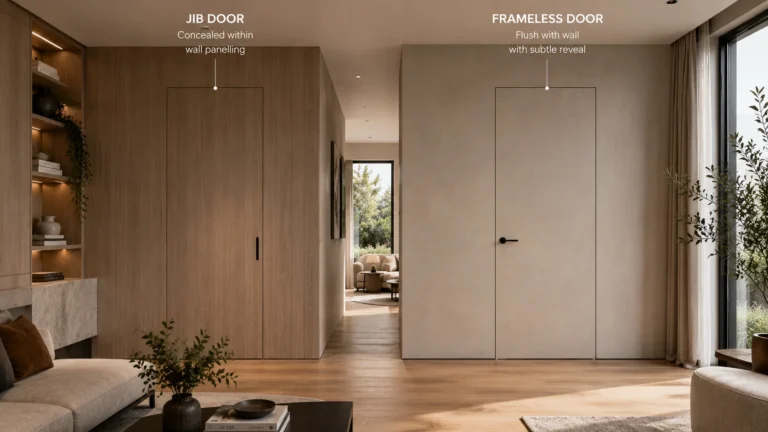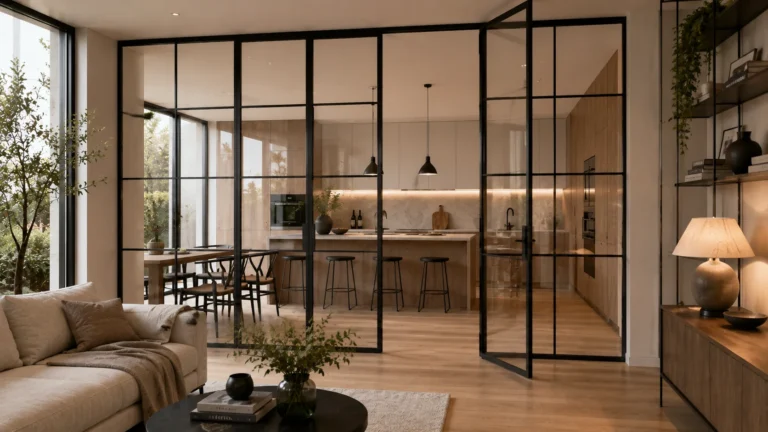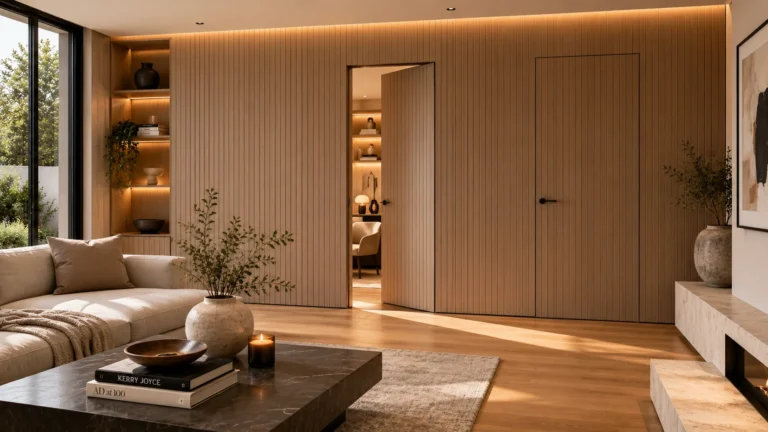
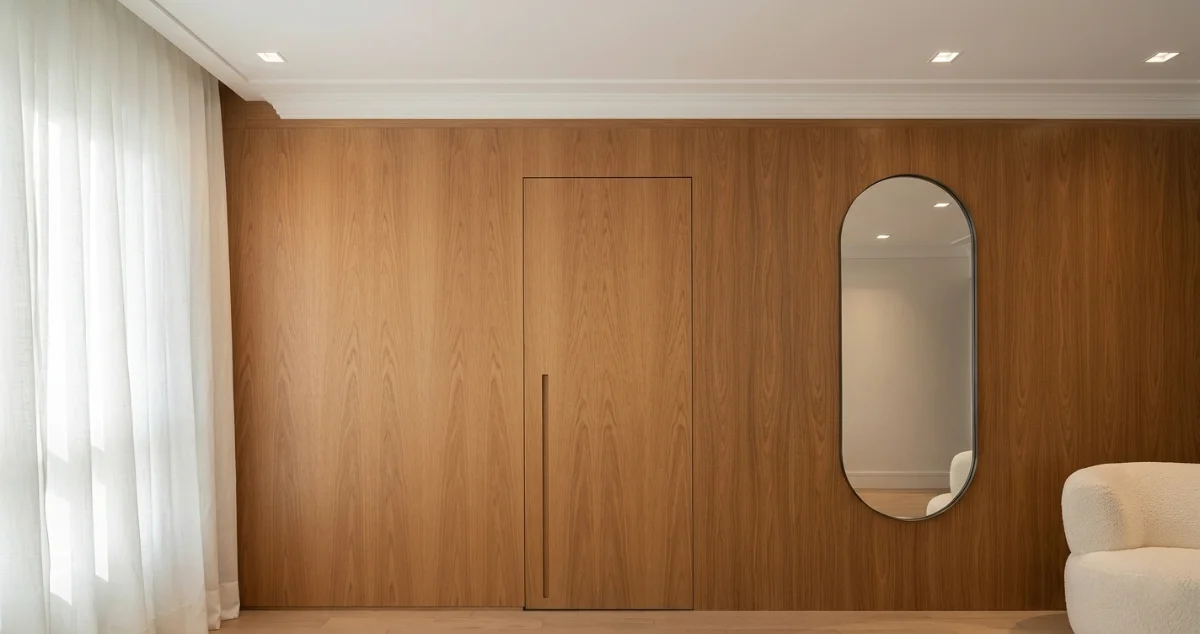
A concealed door frame is a door frame designed to sit discreetly within the wall, rather than projecting outward with visible architraves and trim.
The result is a much cleaner, more architectural finish that allows the door to feel integrated into the wall rather than added to it. If you have been searching for terms such as concealed door frames, minimalist door frame, frameless door frame or seamless door frame, this is the type of detail you are usually looking at.
For homeowners, concealed frames create a calmer, more design-led interior. For architects and contractors, they offer a refined detailing solution for projects where clean lines matter.
They are especially popular in contemporary homes, luxury apartments, bespoke joinery schemes and spaces where jib doors or frameless internal doors are being specified.
In this guide, we will explain what a concealed frame actually is, how it differs from a traditional frame, when each option makes sense, and why this detail has become so important in modern interior design.
What Does a Concealed Door Frame Actually Mean?
In simple terms, a concealed frame is built into the wall so that most of the frame is hidden from view once the plastering and finishing work is complete.
Unlike a traditional door lining or frame, you do not see a decorative architrave wrapping around the opening. Instead, the wall surface runs neatly to the edge of the door, creating a flush and understated look.
This is why concealed frames are so often associated with concealed doors, flush doors and minimalist interiors. The frame still performs the same basic job. It supports the door leaf, carries the hinges and provides the structure needed for smooth opening and closing.
The difference is visual. The detailing is much more discreet.
A concealed frame can be paired with a painted door that blends into the wall, a veneered door that acts as a feature, or a hidden door set within bespoke joinery and wall panelling.
That flexibility is one of the reasons it is now so widely specified in high-end residential projects.
Concealed Door Frame vs Traditional Frame
If you are comparing a concealed frame with a traditional frame, the easiest way to understand the difference is to think about how each one looks once the room is finished.
| Concealed Door Frame | Traditional Door Frame |
|---|---|
| Frame is largely hidden within the wall | Frame is visible and usually finished with architrave |
| Creates a flush, minimalist appearance | Creates a more familiar, defined door opening |
| Often used with jib doors and frameless doors | Often used with standard internal doors |
| Requires more careful planning and installation | Usually simpler to install on standard projects |
| Ideal for contemporary and design-led schemes | Ideal for traditional interiors and straightforward refurbishments |
This does not mean one is always better than the other. It means they solve different design problems. A traditional frame is practical, familiar and perfectly suitable for many homes.
A concealed frame is chosen when you want the door opening to feel less obvious and more integrated into the architecture of the room.
How Is a Concealed Door Frame Different from a Door Jamb?
One of the reasons this topic causes confusion is that many people also search for what is a door jamb, door jamb vs door frame or is a door jamb the same as a door frame. These are related terms, but they do not mean exactly the same thing.
A door frame usually refers to the full frame assembly around the door opening. A door jamb refers to the vertical side parts of that frame.
In everyday conversation, the terms are often mixed together, which is why you will see both used online and on site.
So, if someone asks what a concealed door frame is, they are usually talking about the overall hidden frame system.
If they ask about a concealed jamb, they are often referring to the same visual idea, but focusing on the side sections of the frame.
For a basic overview of building regulations and approved work, you can also review the UK Government guidance on building regulations approval.
Why Concealed Door Frames Are So Popular
The rise of the concealed frame has a lot to do with the way interiors are designed today. Homeowners and designers increasingly want spaces to feel quieter, simpler and more cohesive. Bulky trims, obvious frame details and broken wall lines can work against that.
Concealed door frames help solve this by supporting a more uninterrupted wall surface. That matters in all kinds of situations. A long hallway feels calmer. A panelled wall looks more intentional. A hidden store room or utility door becomes far less intrusive. In a home office or bedroom suite, the effect can feel especially polished because the door does not compete visually with the rest of the room.
This is also why concealed frames are regularly used alongside concealed doors in wall details, flush skirtings, shadow gaps and full-height wall panelling. It is not just about one product. It is about creating a complete design language.
When Should You Use a Concealed Door Frame?
A concealed frame is usually the right choice when the appearance of the wall and door relationship really matters. That could be because the project is highly contemporary, because the interior includes bespoke joinery, or because you want a hidden door that does not immediately announce itself.
Typical situations where concealed frames work particularly well include:
- Luxury homes with clean, modern detailing
- Bedrooms and dressing areas where a calmer visual finish is preferred
- Home offices, studies and libraries where hidden or discreet access is desirable
- Wall panelling schemes where the door needs to integrate into the wider design
- Properties using jib doors to conceal utility rooms, en suites or storage areas
- Projects where architects want a more minimal door frame detail
In short, if the aim is to reduce visual clutter and make the door feel part of the wall rather than a separate object, a concealed frame is usually worth considering.
When Is a Traditional Door Frame the Better Option?
Traditional frames still make complete sense in many settings. In fact, they are often the right answer. If you are carrying out a straightforward refurbishment, matching existing joinery, or working in a more traditional interior where decorative architraves are part of the character, a conventional frame may be more appropriate.
Traditional frames can also be simpler and more forgiving on projects where wall construction, sequencing or budget do not lend themselves to a concealed system. There is nothing inferior about that. It is simply a different design choice.
For heritage work, it is important to think carefully about what belongs in the building. Some period properties benefit from keeping traditional frame details visible, while others can successfully combine old and new.
If your project involves planning sensitivity or listed status, the Planning Portal is a useful starting point for official guidance before speaking with your architect or local authority.
What Makes a Concealed Frame Work Well?
A concealed frame only looks effortless when it has been planned properly. This is one reason why these systems appeal to architects and design-conscious clients. The detail is subtle, but it is not simple.
Good results depend on several things coming together:
- Accurate setting out before plastering and finishing begins
- Correct wall construction and frame coordination
- Careful hinge positioning and door leaf alignment
- A door finish that suits the surrounding wall or joinery
- Skirting, shadow gap and ceiling details being considered as part of the same scheme
This is exactly why concealed frame projects should never be treated as a last-minute upgrade. If the goal is a truly seamless result, the frame detail needs to be considered early in the design process.
Concealed Door Frames, Jib Doors and Frameless Doors
These terms are closely connected, but they are not interchangeable. A concealed frame is the hidden frame detail itself. A jib door is usually a door designed to blend discreetly into the wall, often using a concealed frame.
A frameless door is a broader visual concept describing a door with a minimal, flush appearance.
In many projects, the three come together. For example, a client may want a frameless internal door to a dressing room, and that door may also be specified as a jib door because it needs to disappear into the wall.
The concealed frame is what makes that look possible.
That is why this topic matters commercially as well as technically. People often start by searching for one phrase, then realise they actually need a whole system of coordinated details.
A Clean Detail with Practical Value
It is easy to think of concealed frames as purely aesthetic, but they also have practical value. They can help a room feel more ordered. They support better integration with bespoke joinery. They can reduce visual interruptions in compact spaces. And they make it easier to create hidden or discreet access points without resorting to gimmicks.
For homeowners, that often means a more elegant finished interior. For architects and contractors, it means a sharper detail that aligns with the wider concept of the project.
Final Thoughts
A concealed door frame is not just a hidden version of a standard frame. It is a deliberate architectural detail used to create cleaner lines, more integrated doors and a more refined overall finish. Compared with a traditional frame, it offers a more minimal appearance and works especially well in contemporary homes, bespoke joinery schemes and projects where discreet access matters.
If you are exploring concealed frames as part of a wider hidden door or minimalist interior scheme, take a look at our jib doors, our frameless internal doors, or our bespoke joinery and wall panelling service. The best results come when the frame, the door and the surrounding design are considered together from the very beginning.